
Sticky Eye in Newborn: Symptoms, Causes, and Treatments
 shraddha trust
1. Introduction
The first few weeks after your baby’s birth are filled with joy and new experiences. However, they also bring many questions and concerns for parents. Even a minor physiological change in a newborn can cause significant anxiety. One of the most frequent presenting complaints in neonatal clinics and paediatric eye departments is a sticky, crusty, or watery eye.
The good news for concerned parents is that a sticky eye in a newborn is usually not a serious or vision-threatening condition. In the vast majority of cases, it occurs due to a blocked tear duct in a newborn (clinically referred to as Congenital Nasolacrimal Duct Obstruction or CNLDO). This is a common physiological delay in development that resolves naturally as the infant grows. However, in a minority of cases, sticky eyes may be triggered by a newborn eye infection (neonatal conjunctivitis or ophthalmia neonatorum), which requires prompt medical evaluation and targeted antimicrobial treatment.
This evidence-based guide provides comprehensive information on symptoms, causes, clinical differentiation, evidence-based home care, and warning signs to help parents determine when gentle home care is sufficient and when to consult a specialist.
2. What Is a Sticky Eye in Newborns?
A ‘sticky eye’ refers to a condition where an infant’s eyelids cling together or form a dry, crusty discharge along the eyelash margins, particularly after sleeping or prolonged naps. Parents frequently notice clear, white, or light yellow newborn eye discharge pooling at the inner corner (canthus) of the eye.
Under normal conditions, tears produced by the lacrimal glands lubricate the surface of the eye and drain through tiny openings called puncta located at the inner corners of the upper and lower eyelids. These tears flow through the nasolacrimal canal into the nasal cavity. When this drainage system is underdeveloped or obstructed, tears pool on the surface of the eye, evaporate partially, and leave behind mucus and dried protein residue—creating the characteristic sticky eyes in babies.
3. Clinical Statistics & Research Facts (India & Global Data)
To provide clear clinical context, current medical literature and epidemiological studies published in the Indian Journal of Ophthalmology (IJO), PubMed, and AIIMS Neonatology guidelines highlight the following facts:
- High Prevalence: Congenital Nasolacrimal Duct Obstruction (CNLDO) is present in 6% to 20% of all full-term newborns at birth.
- Spontaneous Resolution Rate: Clinical studies in South Indian paediatric ophthalmic centers show that over 90% of simple CNLDO cases experience complete spontaneous resolution by 12 months of age without needing surgical intervention.
- Efficacy of Massage: Hydrostatic lacrimal sac massage (Crigler massage) performed correctly by parents achieves a success rate of 85% to 92% in infants under 6 months of age.
- Infective Etiology: Bacterial infections account for roughly 15% to 20% of sticky eye presentations in hospital settings, with Staphylococcus aureus and Streptococcus pneumoniae being the most common pathogens isolated in urban Indian tertiary hospitals.
4. Primary Causes of Sticky Eyes in Newborns
4.1 Blocked Tear Duct (Congenital Nasolacrimal Duct Obstruction – CNLDO)
The most common anatomical cause of a sticky eye is a blocked tear duct in a newborn. During fetal development, the lower end of the nasolacrimal duct is covered by a thin epithelial membrane known as the Valve of Hasner. In most babies, this membrane perforates naturally before birth or shortly after the first cry.
In 1 out of 5 infants, this membrane remains intact at birth. Tears cannot drain into the nose, leading to tear overflow (epiphora) and stasis. The stagnant tears become viscous and form a pale, sticky crust along the eyelids.
4.2 Newborn Eye Infection (Neonatal Conjunctivitis / Ophthalmia Neonatorum)
Neonatal conjunctivitis is an inflammation or infection of the conjunctiva occurring within the first month of life. It requires careful medical diagnosis because untreated bacterial infections can lead to corneal scarring.
- Bacterial Conjunctivitis: Triggered by environmental exposure or contact with common household skin bacteria. Characterized by thick yellow or green purulent discharge, conjunctival redness, and mild eyelid edema.
- Viral Conjunctivitis: Often associated with upper respiratory viral infections or cold viruses. Produces clear or watery discharge with mild redness and systemic cold symptoms.
4.3 Intrapartum / Birth-Related Infections
Infections acquired during passage through the birth canal can present during the first few weeks:
- Chlamydial Conjunctivitis: Presents typically between 5 to 14 days after birth. Symptoms include variable eyelid swelling, conjunctival hyperaemia, and mucopurulent discharge.
- Gonococcal Conjunctivitis: A severe but rare bacterial infection presenting early (2 to 5 days post-birth). It causes marked eyelid swelling and copious, thick purulent discharge requiring urgent systemic antibiotic treatment.
4.4 Chemical Irritation
Prophylactic eye drops or ointments administered at birth to prevent neonatal infections can cause mild chemical conjunctivitis. This irritation usually appears within 24 hours of birth and self-resolves within 48 hours without treatment.
5. Clinical Comparison: Blocked Tear Duct vs. Active Eye Infection
It is vital for parents to distinguish between a simple blocked tear duct and an active infective eye condition. The table below outlines key diagnostic markers:
| Clinical Feature | Blocked Tear Duct (CNLDO) | Neonatal Eye Infection |
| Eye Watering (Epiphora) | Persistent, constant tearing even when calm | Variable or absent |
| Discharge Appearance | Clear, white, or light yellowish crust | Thick, creamy yellow or greenish pus |
| Sclera (White of Eye) | Normal white and healthy color | Pinkish, injected, or bloodshot redness |
| Eyelid Swelling | Absent or extremely minimal | Puffy, swollen, or dark red eyelids |
| Systemic Signs / Behavior | Baby is happy, feeds well, comfortable | Fussy, irritable, light-sensitive, feverish |
| Contagion Risk | Non-contagious (anatomical defect) | Highly contagious through direct contact |
6. Evidence-Based Treatments & Clinical Guidelines
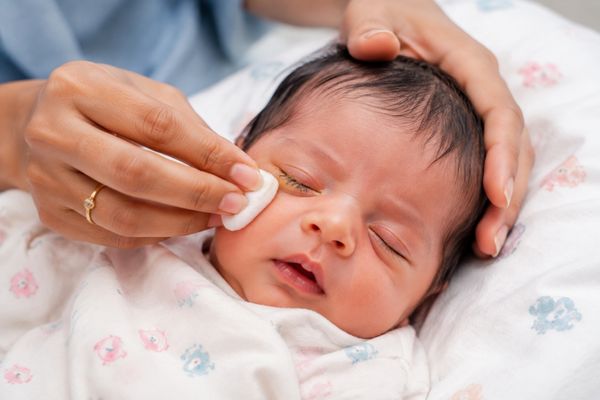
6.1 Hygienic Cleaning Protocol
Proper cleaning keeps the eyelid margins free of crusts and reduces bacterial buildup:
- Wash your hands thoroughly with soap and water before touching the baby’s face.
- Boil fresh water and allow it to cool to room temperature.
- Moisten a sterile cotton ball or gauze pad with the cooled, boiled water.
- Gently wipe the closed eye from the inner corner (near the nose) outward to the outer corner. Use a fresh cotton ball for every single wipe to avoid cross-contamination.
6.2 Hydrostatic Lacrimal Sac Massage (Crigler Maneuver)
For infants with CNLDO, paediatricians recommend gentle lacrimal massage to help rupture the persistent membrane:
- Place your clean index finger against the side of the infant’s nose, just above the inner corner of the eye (over the lacrimal sac).
- Apply gentle, firm downward pressure towards the tip of the nose.
- Perform 5 to 10 strokes, 2 to 3 times daily (often performed during diaper changes or feedings).
6.3 Medical & Surgical Interventions
- Targeted Antibiotic Drops: Prescribed by an eye specialist if a bacterial infection is confirmed. Never use over-the-counter drops.
- Nasolacrimal Duct Probing: If CNLDO does not resolve by 10-12 months of age, a paediatric ophthalmologist can perform a quick, non-surgical probing procedure to open the tear duct.
7. Common Myths vs. Medical Facts
| Common Myth | Evidence-Based Medical Fact |
| Putting expressed breast milk into the eye cures sticky eyes. | FALSE. Breast milk contains sugars and non-sterile components that can promote bacterial proliferation and worsen an infection. Use cooled, boiled water only. |
| Every newborn with sticky eyes requires antibiotic eye drops immediately. | FALSE. Over 80% of sticky eye cases are caused by simple tear duct obstruction, which does not respond to antibiotic therapy. |
| Sticky eye is contagious and will always spread to the other eye or family members. | FALSE. Blocked tear ducts are purely anatomical defects and cannot spread. Only active bacterial/viral conjunctivitis is contagious. |
| If the tear duct is blocked at birth, the baby will need surgery. | FALSE. Over 90% of blocked tear ducts resolve spontaneously or with Crigler massage within the first year without surgery. |
8. Red Flag Symptoms: When to See an Eye Specialist
While mild tear duct blockage can be managed at home, parents should seek immediate consultation with a paediatric ophthalmologist if any of the following warning signs appear:
- Redness or pink coloration covering the white part of the eye (sclera).
- Swollen, puffy, or discolored red eyelids.
- Thick, opaque yellow or green pus oozing continuously from the eye.
- A painful, swollen bump at the inner corner of the eye near the nose (dacryocystitis).
- Light sensitivity (the baby squeezes their eyes shut in normal lighting).
- Systemic symptoms such as fever, lethargy, or poor feeding.
9. Conclusion & Clinical Support
A sticky eye in a newborn is a very common condition that responds well to conservative management, proper eyelid hygiene, and correct lacrimal massage techniques. By understanding the key differences between a simple blocked tear duct and an active infection, parents can provide safe, effective home care with complete confidence.
If your baby exhibits persistent eye discharge, redness, or eyelid swelling, professional medical assessment ensures accurate diagnosis and timely treatment. For expert paediatric eye care and guidance, consult the paediatric ophthalmology team at Shraddha Eye Care Trust.