
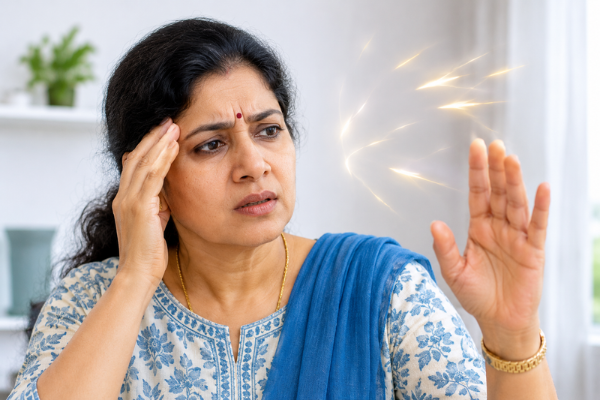
Flashing Lights in Eyes (Photopsia): Causes, Symptoms and Treatment
-
by
shraddha trust
- No Comments on Flashing Lights in Eyes (Photopsia): Causes, Symptoms and Treatment
Introduction
Flashing lights in the eyes may appear as sudden sparks, bright streaks, or flickering shapes, even when there is no actual light source. Some people notice them briefly in the corner of their vision, while others experience repeated flashes that interfere with daily activities.
This visual disturbance, medically known as photopsia, can occur due to changes within the eye or certain neurological conditions. Although some causes are relatively harmless, sudden flashes may indicate a retinal problem requiring immediate medical attention.
Understanding the causes, warning signs, and treatment options for flashing lights in eyes can help protect your vision.
What Are Flashing Lights in Eyes (Photopsia)?
Photopsia refers to seeing flashes or flickers of light without an external source. These may appear as lightning-like streaks, sparkling dots, or shimmering patterns in one or both eyes.
Flashes can occur when the vitreous gel inside the eye pulls on the retina or due to changes in visual processing associated with migraine. Their duration, frequency, and accompanying symptoms help determine the possible cause.
What Causes Flashing Lights in Eyes?
Several conditions can trigger flashes of light in vision, including:
- Posterior vitreous detachment (PVD): As the vitreous gel naturally separates from the retina with age, it may cause brief flashes, particularly in peripheral vision.
- Retinal tear or detachment: Strong traction on the retina can cause a tear or detachment, sometimes accompanied by floaters, shadows, or vision loss.
- Migraine with aura: Temporary shimmering lights, zigzag patterns, or bright spots may appear before or during a migraine, sometimes without a headache.
- Eye or head injuries: Trauma can affect the retina or surrounding structures and trigger flashes.
- Neurological conditions: Certain disorders affecting the optic nerve or brain may occasionally produce unusual visual sensations.
- Medication-related effects: Some medicines can cause visual disturbances, including photopsia.
Are Flashing Lights and Eye Floaters Related?
Yes. Flashes and floaters often occur together due to changes in the vitreous gel. While flashes appear as bursts of light, floaters look like moving dots, threads, or cobweb-like shapes.
A sudden increase in floaters alongside flashing lights may indicate a retinal tear or detachment and requires urgent examination.
When Should You Seek Immediate Medical Attention?
Seek urgent medical care if you experience:
- Sudden or repeated flashes, particularly when they first appear.
- A sudden increase in floaters or dark spots.
- A shadow or curtain spreading across your vision.
- Sudden blurred vision or loss of peripheral vision.
- Flashing lights may occur after an eye or head injury.
- Visual disturbances accompanied by weakness, speech difficulty, or other neurological symptoms.
New flashes should be assessed promptly by an eye specialist, even when there is no pain.
How Are Flashing Lights in Eyes Treated?
Treatment depends on the underlying condition and findings from an eye examination.
- Uncomplicated PVD: Usually requires observation and follow-up rather than specific treatment.
- Retinal tears: Laser treatment or cryotherapy may be used to seal the affected area.
- Retinal detachment: Procedures such as vitrectomy, scleral buckling, or pneumatic retinopexy may be required.
- Migraine-related flashes: Management may involve identifying triggers and using prescribed migraine treatment.
- Other medical causes: Treatment focuses on the relevant eye, neurological, or systemic condition.
A dilated retinal examination helps an ophthalmologist determine whether the flashes are associated with changes that could threaten vision.
Conclusion
Flashing lights in the eyes may last only a few seconds, but their underlying cause should not be overlooked. Recognising the warning signs of flashing lights in eyes (photopsia) and obtaining timely assessment can help prevent avoidable vision complications. At Shraddha Eye Care Trust, patients can seek professional eye care guidance to understand their symptoms and appropriate treatment options.
Frequently Asked Questions
1. Are eye flashes normal with ageing?
Age-related vitreous changes commonly cause flashes, but new symptoms should be examined to rule out retinal problems.
2. Can stress cause flashing lights in vision?
Stress may trigger migraines in some people, which can produce visual flashes or shimmering patterns. However, new flashes should not be attributed to stress without an assessment.
3. Are flashing lights in eyes serious?
Some are harmless, while others may indicate retinal tears or detachment. Sudden flashes, especially with floaters or vision loss, need urgent evaluation.
4. Are flashing lights a symptom of stroke?
Certain strokes or transient ischaemic attacks can cause visual disturbances. Sudden vision changes accompanied by weakness, facial drooping, or speech difficulty require emergency care.
5. Can dehydration cause flashing lights in eyes?
Dehydration may contribute to headaches or migraines in some individuals, but it is not a typical direct cause of retinal flashes.
6. Can high blood pressure cause flashing lights in the eyes?
Severely elevated blood pressure can affect vision, although isolated flashes are not a typical symptom. Sudden visual changes with severe headache or other concerning symptoms need urgent medical assessment.
7. Do flashing lights in eyes go away on their own?
Flashes related to uncomplicated vitreous changes may gradually decrease. However, a retinal examination is necessary to exclude more serious causes.