The Role of NGOs in Encouraging Eye Donation Pledges in Urban Karnataka
-
by
shraddha trust
- No Comments on The Role of NGOs in Encouraging Eye Donation Pledges in Urban Karnataka
1. Introduction
Corneal blindness remains one of the most tragic yet preventable public health crises in India. Unlike many other causes of vision loss, corneal blindness can be cured through corneal transplantation (keratoplasty)—a surgical procedure that replaces a scarred or diseased cornea with clear tissue retrieved from a deceased donor.
Despite rapid advances in ophthalmic surgery and medical technology in urban Karnataka, the demand for donor corneas drastically outstrips availability. The major barrier to corneal procurement is not a lack of surgical infrastructure, but pervasive societal misconceptions, lack of family awareness, and the absence of timely post-demise grief counselling. In this context, Non-Governmental Organisations (NGOs) serve as indispensable drivers of change. Through sustained eye donation awareness programmes, community outreach, corporate drives, and hospital partnerships, organisations like Shraddha Eye Care Trust are educating urban populations and encouraging life-transforming eye donation pledges across Karnataka.
2. Research Statistics & Official Health Data (India & Karnataka)
According to official reports published by the National Programme for Control of Blindness and Visual Impairment (NPCBVI), the Eye Bank Association of India (EBAI), and the Indian Journal of Ophthalmology (IJO):
- High Burden Among Youth: Corneal opacity accounts for 37.5% of visual impairment among individuals aged 0 to 49 years in India, disproportionately impacting working-age adults and children.
- Tissue Utilization Rates: Out of the total donor corneas collected nationally, approximately 45% to 50% are suitable for sight-restoring optical keratoplasty, making continuous procurement critical.
- The Awareness-to-Action Gap: Surveys conducted in urban Karnataka (including Bengaluru, Mysuru, and Mangaluru) indicate that while over 80% of urban residents are aware of eye donation, less than 25% know the specific procedural steps or discuss their donation wishes with family members.
- Impact of NGO Grief Counsellors: Studies show that Hospital Cornea Retrieval Programs (HCRP) run in collaboration with NGOs yield up to 60% higher family consent rates compared to unassisted voluntary reporting.
3. Why Eye Donation Awareness Matters in Urban Karnataka
Urban centers in Karnataka host state-of-the-art eye banks and specialized corneal transplant surgeons. However, donor tissue collection depends entirely on voluntary altruism and immediate family consent following natural death. Eye donation awareness in urban Karnataka is crucial because:
- Time-Critical Window: Corneas must be retrieved within 4 to 6 hours after death. Without prior awareness, families rarely initiate contact with an eye bank in time.
- Legal Necessity of Family Consent: In India, signing an eye donation pledge card is a legal declaration of intent, but post-demise consent from legal heirs remains mandatory under the Transplantation of Human Organs Act (THOA). Communicating one’s pledge to family is paramount.
- Overcoming Misconceptions: Dismantling persistent social taboos—such as fear of facial disfigurement or religious misconceptions—requires continuous, culturally sensitive education.
4. The Multi-Faceted Role of NGOs in Driving Eye Donation Pledges
An active NGO for eye donation in Karnataka functions as a vital bridge between public health institutions, medical eye banks, and local communities. Key strategic functions include:
4.1 Hospital Cornea Retrieval Programs (HCRP)
NGOs place trained grief counsellors in major government and private hospitals across urban Karnataka. When a death occurs, counsellors gently approach grieving family members, offer emotional support, provide accurate facts about eye donation, and facilitate the tissue retrieval process with dignity.
4.2 Institutional & Corporate Awareness Programmes
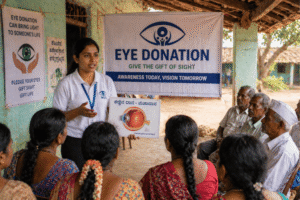
Karnataka’s vibrant corporate and educational hubs (IT parks in Bengaluru, university campuses in Mysuru and Mangaluru) provide fertile ground for mass outreach. NGOs organize corporate wellness seminars, digital pledge campaigns, and student rallies to engage young adults.
4.3 Community Engagement in Residential Associations
NGOs conduct interactive sessions within apartment complexes, senior citizen clubs, and resident welfare associations (RWAs). These neighborhood sessions create open forums where families discuss end-of-life wishes together.
5. Eye Donation Awareness Programmes Across Urban Karnataka
| Target Sector | Primary Outreach Format | Impact & Strategic Goal |
| Corporate Offices (IT / Tech Parks) | Digital pledge portals, lunch-and-learn seminars, CSR partnerships | Encourages working professionals to register an official eye donation pledge in Karnataka. |
| Colleges & Universities | Interactive workshops, youth ambassador clubs, awareness rallies | Empowers students to become advocates and discuss donation with parents at home. |
| Residential Welfare Associations | Apartment complex Q&A drives, health screening camps | Engages multi-generational families to normalize family-wide donor consent. |
| Hospitals & Health Centers | Stationed grief counsellors, clinical staff training, HCRP expansion | Maximizes real-time tissue retrieval following inpatient deaths. |
6. Step-by-Step Guide: How to Pledge Your Eyes
Pledging your eyes is simple, legally recognized, and takes less than 5 minutes:
- Step 1: Register Your Intent: Complete a pledge form online or offline through a recognized organisation like Shraddha Eye Care Trust or a certified government eye bank.
- Step 2: Obtain Donor Card: Download or receive your official Eye Donor Card and keep it in your wallet or digital document folder.
- Step 3: Inform Your Family (Crucial): Inform your immediate family members (spouse, parents, children) of your decision. Explain that their consent will be required after your passing.
- Step 4: Post-Demise Action: In the event of demise, family members should immediately contact the nearest eye bank or dial the nationwide toll-free hotline (1919).
7. Who Can Donate? Eligibility Facts & Dispelling Myths
Widespread ignorance about medical eligibility deters many willing individuals from registering. Medical facts include:
| Common Myth | Medical & Legal Reality |
| People with diabetes, high blood pressure, or spectacles cannot donate. | FACT: Anyone can donate! Spectacle wearers, diabetics, hypertensives, and those with past cataract surgery are eligible donors. |
| Eye donation disfigures the face of the deceased. | FACT: Tissue retrieval takes 20-30 minutes, leaves no visible disfigurement, and uses transparent prosthetic caps to preserve normal facial appearance. |
| Eyes can be bought or sold commercially. | FACT: Commercial organ trading is strictly illegal under THOA in India. Eye donation is entirely voluntary and free of cost to the donor family. |
| An eye donor card automatically guarantees donation after death. | FACT: Legally, next-of-kin consent is mandatory after death. Discussing your pledge with family is the single most important step. |
8. How Shraddha Eye Care Trust Is Making a Difference
Shraddha Eye Care Trust is at the forefront of eliminating avoidable corneal blindness across Karnataka. Through dedicated community outreach, public education, corporate partnerships, and hospital retrieval support, the Trust actively promotes eye donation pledges and supports sight-restoring keratoplasty for underprivileged individuals.
- Organizing structured awareness sessions in schools, colleges, and IT parks across Karnataka.
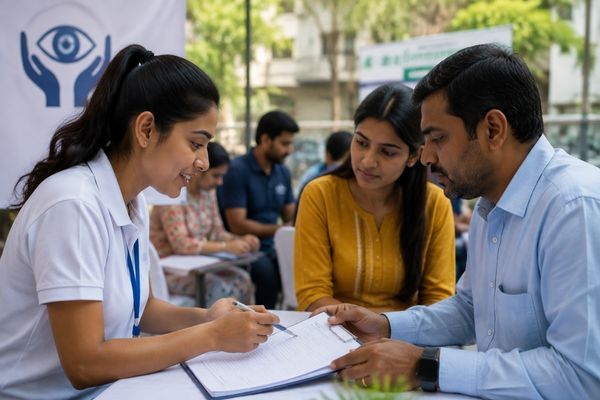
- Conducting seamless online and offline pledge registration drives for individuals and groups.
- Collaborating with local hospitals and eye banks to streamline post-demise tissue collection.
- Providing subsidized or free corneal transplant surgeries for economically disadvantaged patients.
9. Conclusion & Call to Action
Eye donation is one of the most noble gifts a human being can offer—giving two visually impaired individuals the opportunity to see the world. By supporting NGOs for eye donation awareness in Karnataka, participating in awareness drives, and taking an eye donation pledge in Karnataka, you can help eradicate corneal blindness.
Take the pledge today and inform your family. To register your eye donation pledge or partner with Shraddha Eye Care Trust for an awareness drive, visit our website or contact our team.