The Importance of Eye Donation: A Gift of Sight
 shraddha trust
Introduction
Eye donation is a noble act that can help restore vision to people living with corneal blindness. By choosing to donate eyes after death, a person can give someone the opportunity to see again and lead a more independent life.
The impact of eye donation goes beyond the recipient. Restoring sight can also support families and communities by helping people return to education, work and everyday activities.
What Is Eye Donation?
Eye donation is the voluntary act of donating the eyes after death so that healthy corneal tissue can be used for transplantation. The cornea is the clear, dome-shaped tissue at the front of the eye. It helps focus light onto the retina and plays an important role in clear vision.
When the cornea becomes scarred or cloudy because of disease, injury or infection, vision may be severely reduced or lost. A healthy donated cornea can be transplanted to a suitable recipient to help restore vision.
Why Is Eye Donation Important?
Many people experience vision loss because of corneal diseases, injuries and infections. For suitable patients with corneal blindness, a corneal transplant may provide an opportunity to regain useful vision.
Eye donation is important because donated corneal tissue can help reduce the shortage of tissues available for transplantation.
Helping Restore Vision
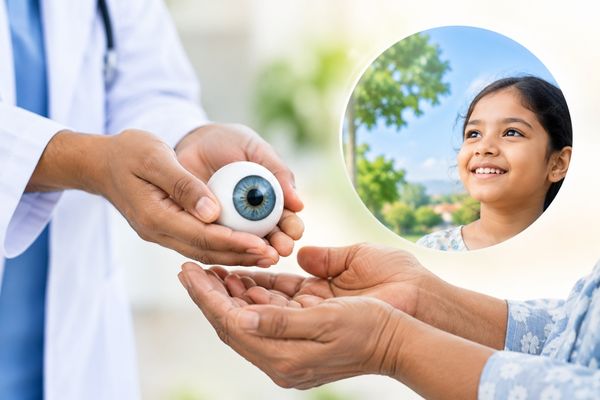
A donated cornea can help a person with corneal blindness regain vision and become more independent.
- Corneal blindness can result from disease, injury or infection.
- Corneal transplantation can restore vision in suitable patients.
- One pair of donated eyes can potentially help restore sight to two people.
Reducing the Donor-Recipient Gap
There continues to be a significant difference between the number of people who need corneal transplants and the availability of donated corneal tissue.
In 2023–24, 27,394 corneal transplants were carried out against an estimated demand of around 2 lakh.
Increasing awareness and participation in eye donation can help reduce this gap and make more donor tissue available for people waiting for transplantation.
Supporting Independence and Opportunity
Vision loss can affect education, employment, daily activities and quality of life. Restoring sight can help people participate more independently in family, social and professional life.
- Children may have better opportunities to continue their education.
- Adults may be able to return to work or daily activities.
- Families may experience less dependence on others for everyday tasks.
Creating a Legacy Beyond Life
Eye donation is also a way of leaving a meaningful legacy. A person’s decision to donate their eyes can continue to benefit others even after their lifetime.
It is an act of compassion that can inspire others to consider eye donation and contribute to the gift of sight.
Who Can Donate Eyes?
Eye donation is an inclusive form of donation, and many people can become eye donors. Age, wearing spectacles or having certain common health conditions does not automatically prevent someone from donating.
People who may be eligible include:
- People of different age groups
- People with diabetes or hypertension
- People who wear spectacles
- People who have undergone cataract surgery
- People who have had LASIK, PRK or SMILE
- People who had vision loss due to retinal or optic nerve conditions, provided the corneal tissue is suitable
Certain conditions may prevent donation, including some infectious diseases, cancers of the eye and severe corneal diseases. The final decision is made by trained eye-care professionals after medical evaluation.
When and How Is Eye Donation Done?
Understanding the eye donation process can help families make informed decisions at an important time. Eye donation should be arranged promptly after death so that the corneal tissue can be assessed for transplantation.
Timing
Eye donation should generally take place within 6–8 hours after death. The eye bank should therefore be contacted as soon as possible.
Documentation
A valid Death Certificate, signed by a registered medical practitioner, is required and should be provided to the eye bank team.
Collection Procedure
A trained eye-bank team collects the donated corneal tissue from the donor’s home or hospital.
- The procedure generally takes around 15–20 minutes.
- It is performed carefully and respectfully.
- It does not disfigure the donor.
- Normal funeral arrangements can continue after the procedure.
Consent
If the deceased had not formally pledged their eyes, the next of kin may provide consent. This is why it is important to discuss your decision about eye donation with your family in advance.
After Donation
The donated eyes are taken to the eye bank, where the corneal tissue is examined and processed for possible transplantation.
The other parts of the eye are generally not used for transplantation; the focus is on suitable corneal tissue.
Does Eye Donation Delay the Funeral?
No. The collection procedure is completed promptly and does not prevent the family from proceeding with normal funeral arrangements.
The donor is treated with dignity and respect throughout the process.
Is Eye Donation Anonymous?
Yes. Eye donation is anonymous. Information about the donor and recipient is not shared with each other.
Eye donation is also an act of charity. No monetary payment is made to the donor’s family or received from the recipient for the donated tissue.
How Can You Pledge Your Eyes?
Pledging your eyes is a simple way to record your intention to donate after death. More importantly, your family should also know about your decision because their cooperation is important when the donation needs to be arranged.
You can:
- Register your eye donation pledge through Shraddha Eye Bank .
- Complete the required donor details and next-of-kin information.
- Keep your donor information accessible.
- Inform your family about your decision to donate.
- Encourage your family members to understand and respect your wishes.
A pledge expresses your intention to donate, while the donation process after death is carried out according to the required consent and medical evaluation.
Conclusion
Eye donation can give a person with corneal blindness an opportunity to regain vision and live with greater independence. It can also help reduce the shortage of corneal tissue available for transplantation.
A decision made during your lifetime can create a lasting impact after your death. By pledging your eyes and informing your family about your wishes, you can contribute to the gift of sight and offer hope to someone waiting for the opportunity to see again.
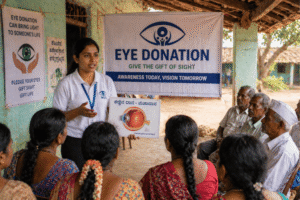
Shraddha Eye Bank / Shraddha Eye Care Trust supports awareness about eye donation and the importance of making the decision known to your family
Give The Gift Of Sight
Pledge your eyes and become a hope for someone in need.
Learn More: https://nethradhama.org/eyedonation/
Reach Us: 08062159821