
Childhood Myopia: Symptoms and Treatment Options
 Yuvaraj K, GM
Many parents first notice something unusual not during a clinic visit, but in everyday moments, such as a child moving closer to the blackboard, struggling to recognize a person from a distance, or not showing interest in reading and writing like activities. The small signs may seem normal at first, but they can subtly indicate a vision problem that is becoming more prevalent in school-age children called childhood myopia.
At Shraddha Eye Care Trust, we often see families surprised by how gradually these changes develop. Many parents often miss the early signs of vision changes, assuming it is temporary or related to fatigue. However, when left unnoticed, these small changes can gradually affect a child’s learning ability, confidence, and overall development.
The significance of this is that vision changes in children are very manageable if they are detected early. Our aim is to make parents aware of such conditions so that they can protect the vision of their kids.
Symptoms of Childhood Vision Problems
Many children can’t express it clearly when they are having a vision problem and it is important that parents should observe this early. Being aware of small changes in behaviour can help to detect vision problems early.
Common symptoms of childhood myopia include:
- Squinting when viewing distant objects
- Blurry vision
- Sitting very close to TV or holding books too near
- Complaining of headaches after studying
- Reduced interest in reading or activities requiring focus
Early recognition of these signs can prevent additional visual strain and learning problems, and are often associated with symptoms of childhood myopia.
Treatment Options for Children with Myopia
Early intervention for vision problems can make a significant difference in a child’s day-to-day comfort and learning experience. Eye examinations are useful for determining the level of vision change and determining the appropriate corrective strategy. It also helps the doctor to plan treatment for myopia in kids accordingly.
Common approaches include:
- Prescription glasses for clear vision correction
- Eye exams to monitor changes periodically
- In certain instances, contact lenses with the guidance of an eye doctor
- Continuous monitoring for vision stability
In modern treatment of myopia in children, correction is not the only objective, but also to remove visual barriers so that children can continue to study, play and daily activities without problems.
Prevention of Myopia and long-term eye health
Proper care and healthy lifestyle habits are crucial for managing vision health in children. Over time, small changes in everyday life can help support better eye development.
Key practices include:
- Encourage kids for outdoor play
- Regular exposure to sun for a limited time
- Restriction in long-term digital screen usage
- Promoting few minute breaks in study hour
- Ensuring a correct reading distance and lighting
- Regular eye examinations
These measures are part of successful myopia control in children to help prevent vision progression and promote eye health in children.
What Happens During Myopia Evaluation and Treatment
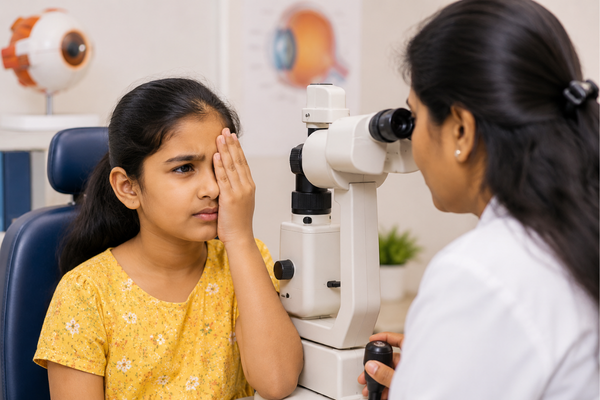
- When a child is taken for an eye check-up, the process is simple and designed to make them comfortable.
- Vision is first checked using a standard eye chart to see how clearly the child can see at different distances.
- If needed, the doctor may use special instruments to measure how the eyes focus light.
- In some cases, eye drops are used to relax the eyes for more accurate testing.
- The entire evaluation is painless and usually completed within a short time.
After diagnosis:
- The eye specialist explains the vision status to parents in simple terms.
- Most children are prescribed corrective glasses to improve distance vision.
- Parents are guided on how and when the child should wear glasses (school, reading, daily use, etc).
- Regular follow-up visits are suggested to track vision changes over time.
- Additional support may be discussed if vision continues to change gradually.
This step-by-step approach helps ensure early care for conditions like childhood myopia while keeping the child’s learning and daily comfort in focus.
Shraddha Eye Care Trust: Promoting Awareness and Support
Shraddha Eye Care Trust is actively involved in raising awareness of child vision health in the community. We emphasise early detection and education to make families aware of the significance of eye health.
We are focusing on the following key activities:
- Low-cost eye screening camps for children
- Community awareness programs
- Camps to creates awareness between parents
- Promoting timely eye exams
We promote awareness of childhood myopia in all parts of the community by these initiatives, thereby helping children to get timely attention and care.
Conclusion
Early identification, school participation, and frequent eye exams can make a huge difference to a child’s vision health. Through the support of Shraddha Eye Care Trust, families can help their kids manage childhood myopia and ensure children grow with clearer vision, improved learning ability, and healthier eye development.