How NGOs Support Free Eye Care for Elderly Residents in Bangalore Old Age Homes
-
by
shraddha trust
- No Comments on How NGOs Support Free Eye Care for Elderly Residents in Bangalore Old Age Homes
For an elderly person, losing vision can mean losing more than clear sight. It can affect the ability to read, recognise familiar faces, walk confidently, and remain independent. Around 80% of distance vision impairment and blindness occurs in people aged 50 years and above, making eye care especially important in later life.
For elderly residents living in Bangalore old age homes, regular eye check-ups may not always be easy to access because of mobility, financial, or transport limitations. This is where NGOs and charitable eye-care organisations can help by bringing free eye screenings, spectacles, referrals, and treatment support closer to senior communities.
Why Elderly Residents Need Regular Eye Care
Ageing increases the risk of several eye conditions. Cataract can gradually cloud vision, glaucoma may damage sight without obvious early symptoms, and diabetes can affect the retina. Even an outdated spectacle prescription can make everyday activities unnecessarily difficult.
Regular eye check-ups can help identify:
Cataract
Glaucoma
Diabetic eye disease
Refractive errors
Dry eye
Age-related retinal problems
Detecting these conditions early can help seniors receive appropriate treatment before vision is affected further.
Why Eye Care Can Be Difficult to Access in Old Age Homes
For many elderly residents, visiting an eye hospital is not as simple as booking an appointment.
Some may need assistance to travel, while others may depend on carers or have difficulty managing repeated hospital visits. Financial limitations can also lead residents to postpone eye examinations, spectacles, diagnostic tests, or treatment.
Free community eye-care programmes help reduce these barriers by bringing basic eye-care services closer to where senior citizens live.
How NGOs Support Free Eye Care for Elderly Residents
1. Free Eye Check-Up Camps
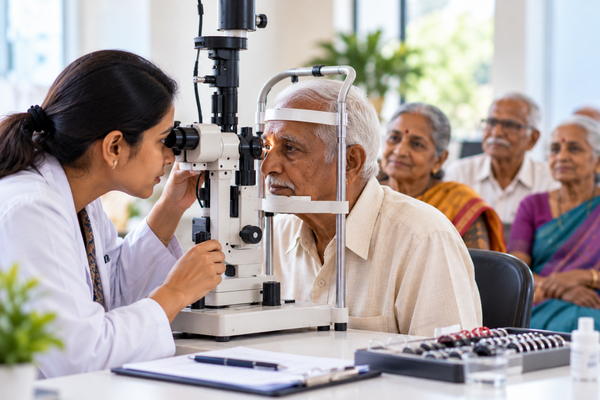
NGOs can organise eye screening camps directly at old age homes, making examinations more convenient for residents.
These camps can help identify reduced vision, cataracts, refractive errors, and other signs that require further medical evaluation.
2. Cataract Screening and Treatment Support
Cataract is particularly common among older adults. Through screening camps, residents who may need cataract surgery can be identified and referred for further examination.
Patients who need further care can be guided toward appropriate free or affordable treatment options, depending on their medical needs and the services available.
3. Spectacle Support
Sometimes a senior’s vision can improve significantly with the correct spectacles.
Providing refraction tests and suitable glasses can help elderly residents read, watch television, recognise faces, and move around more confidently.
4. Screening for Glaucoma and Diabetic Eye Disease
Some serious eye conditions do not always produce obvious symptoms in the early stages.
NGO-supported screening can help identify people who may require more detailed tests for glaucoma, diabetic retinopathy, or other retinal conditions.
5. Referral and Follow-Up Care
A screening camp is only the beginning.
Residents who need further investigation or treatment should be referred to an eye-care centre. Continued follow-up is especially important for chronic conditions such as glaucoma and diabetic eye disease.
What an Eye Care Camp in an Old Age Home Can Include
A well-planned program may provide:
Vision testing
Refraction and spectacle assessment
Cataract screening
Basic glaucoma risk assessment
Diabetic eye evaluation
Eye-health counselling
Referral for specialist treatment
Follow-up support
This creates a more complete pathway from screening to treatment, rather than limiting care to a one-day camp.
The Role of Shraddha Eye Care Trust
Shraddha Eye Care Trust works toward making eye care accessible to underserved communities through screening, awareness, diagnosis, and treatment support.
Community-based initiatives such as free eye camps can be especially valuable for senior citizens who may otherwise delay eye examinations because of mobility or financial limitations.
By working with old age homes, carers, volunteers, and community organisations, eye-care trusts can help identify residents who need spectacles, cataract treatment, glaucoma evaluation, or further specialist care.
For Shraddha Eye Care Trust, such community outreach reflects a broader objective: ensuring that preventable or treatable vision problems are identified before they unnecessarily reduce a person’s independence and quality of life.
Why Partnerships With Old Age Homes Matter
Regular partnerships between NGOs and old age homes can provide more consistent eye care than occasional standalone camps.
Such collaborations can help:
Schedule periodic eye examinations
Maintain eye-health records for residents
Identify changes in vision over time
Arrange specialist referrals
Support access to spectacles
Educate carers about warning signs
Follow up after treatment or surgery
For elderly residents, continuity of care can be just as important as the first screening.
How Better Vision Supports Better Ageing
Clearer vision can influence many aspects of everyday life.
It can help an elderly person move around with greater confidence, read independently, recognise family and friends, participate in activities, and remain socially engaged.
For someone living in an old age home, these seemingly small improvements can have a meaningful impact on independence and overall well-being.
Building Better Eye Care Access for Bangalore’s Elderly
Improving senior eye health requires cooperation between old age homes, NGOs, eye-care professionals, carers, donors, and community volunteers.
Free eye-care programmes can help bring essential screening and treatment closer to elderly residents rather than expecting every senior to overcome mobility, financial, or transport barriers on their own.
Organisations such as the Shraddha Eye Care Trust can contribute to this effort by supporting accessible eye examinations, early detection, referrals, and appropriate treatment for those who need them most.
Conclusion
Vision loss should not automatically be accepted as an unavoidable part of ageing.
Regular eye check-ups can help detect cataracts, glaucoma, diabetic eye disease, refractive errors, and other conditions before they create greater difficulty in everyday life.
By bringing free eye care directly to elderly communities, NGOs can help Bangalore old age homes provide residents with better access to screening, treatment, and continued vision support.
For elderly residents, a timely eye examination may mean more than seeing clearly—it can help preserve confidence, mobility, independence, and connection with the world around them.
Take Action
Bring better eye care closer to your elderly residents. Partner with Shraddha Eye Care Trust to organise free eye screening and community eye-care support for your old age home in Bangalore.