
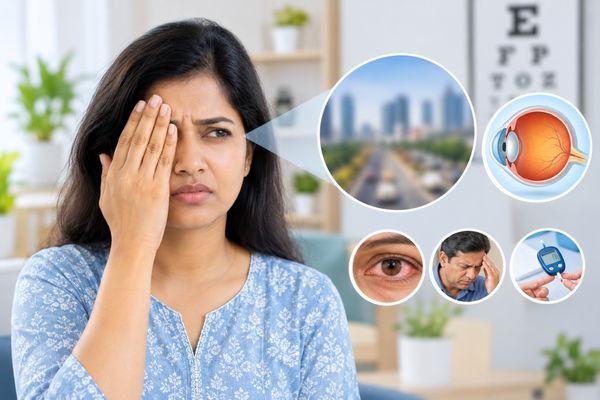
Blurry Vision in One Eye: Causes, Treatment and When to Seek Urgent Care
-
by
shraddha trust
- No Comments on Blurry Vision in One Eye: Causes, Treatment and When to Seek Urgent Care
Clear vision depends on the proper functioning of different parts of the eye, including the cornea, lens, retina, and optic nerve. Occasionally, a person may notice blurring in only one eye due to temporary issues such as dryness or eye strain. However, sudden or persistent changes in vision may indicate an underlying eye condition that requires medical attention.
By understanding the potential causes, treatment options, and warning signs, you can take the necessary steps to safeguard your eyesight.
In this blog, we will discuss the common causes of blurry vision in one eye, available treatments, and when you should seek urgent eye care.
Synopsis
Common Causes of Blurry Vision in One Eye
Treatment Options
When to Seek Urgent Care
Managing Blurry Vision in One Eye
Why Choose Shraddha Eye Care Trust
Frequently Asked Questions
Common Causes of Blurry Vision in One Eye
Eye Infections
Eye infections such as conjunctivitis or keratitis can affect vision in one eye. They may cause symptoms like redness, irritation, discharge, pain, or sensitivity to light.
Treatment depends on the type of infection and may include medicines prescribed by an eye specialist.
Eye Strain
Long hours of screen use, reading, or close-up activities can cause temporary eye strain. This may result in blurred vision, dryness, headaches, or difficulty focusing.
Taking regular screen breaks, blinking frequently, and following the 20-20-20 rule can help reduce discomfort.
Refractive Errors
Changes in the focusing ability of the eye can cause blurry vision. Common refractive errors include:
Myopia
Hyperopia
Astigmatism
Presbyopia
A comprehensive eye examination can identify the exact cause. Glasses or contact lenses may help improve vision clarity.
Age-Related Macular Degeneration (AMD)
Age-related macular degeneration affects the macula, the central part of the retina responsible for detailed vision.
Dry AMD usually progresses slowly, while wet AMD can cause quicker vision changes due to abnormal blood vessel growth and fluid leakage. Treatment may include monitoring, lifestyle changes, or injections depending on the condition.
Retinal Detachment
Retinal detachment is a serious eye condition that can cause sudden blurring or loss of vision in one eye.
Warning signs may include:
Flashes of light
Sudden increase in floaters
Curtain-like shadow over vision
Reduced side vision
Immediate medical attention is required because delayed treatment may lead to permanent vision loss.
Eye Injuries
Injuries such as corneal scratches, foreign bodies, or contact lens-related problems can cause pain and blurred vision.
Avoid rubbing the eye after an injury and seek medical advice to prevent complications such as infection or scarring.
Dry Eye Syndrome
Dry eye occurs when the eyes do not produce enough tears or when tears evaporate too quickly.
Common symptoms include:
Burning sensation
Redness
Grittiness
Light sensitivity
Fluctuating vision
Treatment may include lubricating eye drops, lifestyle changes, warm compresses, and prescribed medicines when required.
Treatment Options for Blurry Vision in One Eye
Treatment depends on the underlying cause. An ophthalmologist may recommend:
Refractive errors: Glasses, contact lenses, or suitable procedures depending on the condition.
Eye infections: Medicines based on the type of infection diagnosed.
Dry eye: Lubricating drops, lifestyle changes, and prescribed treatment when needed.
Retinal conditions: Injections, laser treatment, or surgery depending on severity.
Eye injuries: Appropriate medicines, foreign body removal, or further treatment if required.
Self-medication should be avoided because it may delay correct diagnosis and treatment.
When Should You Seek Urgent Care?
Immediate eye care is important if you experience:
Sudden blurry vision without a clear reason
Flashes of light or many new floaters
A curtain-like shadow across your vision
Severe eye pain with halos around lights
Sudden vision loss
Vision changes after an injury or chemical exposure
Vision changes along with facial weakness, speech difficulty, or trouble walking
These symptoms may indicate serious eye or health conditions that require urgent evaluation.
Managing Blurry Vision in One Eye
Some causes of blurry vision, such as dryness or refractive errors, may improve with appropriate care. However, ongoing or recurring symptoms should not be ignored.
A detailed eye examination helps identify whether the problem is related to the cornea, lens, retina, optic nerve, or another part of the eye. Early evaluation allows timely treatment and helps protect vision.
Why Choose Shraddha Eye Care Trust?
At Shraddha Eye Care Trust, patients receive comprehensive eye evaluations and personalised care for various vision-related concerns.
The team focuses on:
Detailed eye examinations
Accurate diagnosis of eye conditions
Personalised treatment planning
Advanced eye care support
Patient-focused guidance for maintaining healthy vision
Conclusion
Blurry vision in one eye can occur due to several reasons, ranging from temporary eye problems to conditions that require urgent treatment.
Do not ignore sudden or persistent changes in your vision. Early evaluation can help identify the cause and protect your eyesight.
Consult Shraddha Eye Care Trust for expert eye evaluation and appropriate treatment guidance for blurry vision and other eye conditions.
Frequently Asked Questions
What can cause sudden blurry vision in one eye?
Sudden blurry vision may occur due to retinal problems, eye injuries, infections, glaucoma, or other serious conditions. Immediate evaluation is recommended, especially if symptoms appear suddenly.
Can blurry vision in one eye be temporary?
Yes. Eye strain, dryness, or temporary irritation can cause short-term blurring. Persistent symptoms should be checked by an eye specialist.
How is blurry vision in one eye treated?
Treatment depends on the cause and may include glasses, medicines, eye drops, injections, laser treatment, or surgery.
Can high blood pressure affect vision in one eye?
High blood pressure can affect eye blood vessels and may contribute to vision changes. An eye specialist should always evaluate sudden vision problems.
Do I need glasses if one eye is blurry?
Glasses may help if the cause is a refractive error. To identify the underlying issue, an eye exam is necessary.