Stages of Diabetic Retinopathy: Symptoms and Treatment
 shraddha trust
Our eyes help us experience the world around us, but certain health conditions can slowly affect the way we see. Diabetes is one such condition that can impact eye health over time, especially when blood sugar levels remain high for a long period.
Inside the eye, the retina plays an important role in creating clear vision. When diabetes damages the small blood vessels that supply the retina, it can lead to diabetic retinopathy. The condition may develop gradually and often shows no warning signs in the early stages.
Understanding the different stages of diabetic retinopathy, its symptoms, and treatment options can help people take timely steps to protect their vision.
In this blog, we will explore how diabetic retinopathy progresses, how it is diagnosed, and the available treatment options to manage the condition.
Synopsis
What Is Diabetic Retinopathy?
What Causes Diabetic Retinopathy?
Diabetic Retinopathy and Diabetes Mellitus (DM)
Diabetic Retinopathy and Hypertension: Impact on Eye Health
Stages of Diabetic Retinopathy
Symptoms of Diabetic Retinopathy
Diagnosis and Monitoring
Treatment Options
Preventing Diabetic Retinopathy
Why Choose Shraddha Eye Care Trust
What Is Diabetic Retinopathy?
Diabetic retinopathy is a diabetes-related eye condition that affects the retina. High blood sugar can damage retinal blood vessels and lead to swelling, leakage, or bleeding.
Both Type 1 and Type 2 diabetes can increase the risk of developing this condition.
What Causes Diabetic Retinopathy?
The main cause of diabetic retinopathy is prolonged high blood sugar, which damages the small blood vessels of the retina.
Risk factors include:
Long-term diabetes
Poor blood sugar control
High blood pressure
High cholesterol
Smoking
Diabetes during pregnancy
Diabetic Retinopathy and Diabetes Mellitus (DM)
Diabetes mellitus plays an important role in the development of diabetic retinopathy. Continuous high blood sugar levels can gradually damage the retinal blood vessels.
People with Type 1 diabetes may develop retinal changes after several years due to long-term exposure to high blood sugar levels.
In Type 2 diabetes, retinal changes may sometimes be present when diabetes is diagnosed, especially if blood sugar levels were uncontrolled for a long time.
Regular diabetic eye screening helps detect these changes early and supports timely management.
Diabetic Retinopathy and Hypertension: Impact on Eye Health
High blood pressure can affect the delicate blood vessels of the retina. Increased pressure may weaken these vessels and increase the risk of leakage or bleeding.
When diabetes and hypertension occur together, they can increase stress on retinal blood vessels and may speed up eye damage.
Managing blood sugar and blood pressure levels is important for maintaining healthy vision.
Stages of Diabetic Retinopathy
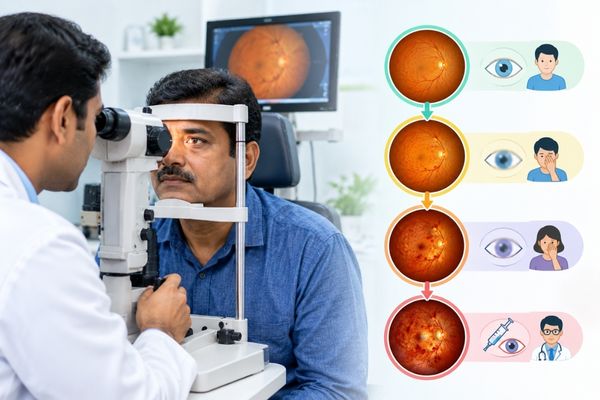
Diabetic retinopathy is mainly divided into two stages:
Non-Proliferative Diabetic Retinopathy (NPDR)
Proliferative Diabetic Retinopathy (PDR)
Stage 1: Non-Proliferative Diabetic Retinopathy (NPDR)
Non-Proliferative Diabetic Retinopathy (NPDR) is the early stage of diabetic retinopathy. It occurs when high blood sugar levels begin to damage the small blood vessels of the retina.
The blood vessels may become weak, develop small changes, and leak fluid or blood into the retina.
NPDR is divided into different levels based on the severity of retinal changes.
No Diabetic Retinopathy (No DR)
At this stage, no visible signs of diabetic retinopathy are found during an eye examination.
People with diabetes should continue regular eye screening because retinal changes may develop over time.
Very Mild Non-Proliferative Diabetic Retinopathy
This condition is the earliest stage of NPDR. Small changes in retinal blood vessels, known as microaneurysms, may appear due to the weakening of vessel walls.
Vision is usually not affected, but regular monitoring helps track any progression.
Mild Non-Proliferative Diabetic Retinopathy
In mild NPDR, small blood vessel changes become more noticeable. Minor leakage or small bleeding spots may develop in the retina.
Regular eye examinations help monitor the condition and prevent further progression.
Moderate Non-Proliferative Diabetic Retinopathy
In moderate NPDR, more retinal blood vessels become affected. Some vessels may become blocked, while others may leak fluid or blood.
These changes can reduce oxygen supply to parts of the retina and increase the risk of progression.
Severe Non-Proliferative Diabetic Retinopathy
In severe NPDR, a larger number of retinal blood vessels are damaged or blocked.
Reduced blood supply may trigger the growth of abnormal new blood vessels, increasing the risk of progressing to Proliferative Diabetic Retinopathy (PDR).
Stage 2: Proliferative Diabetic Retinopathy (PDR)
Proliferative Diabetic Retinopathy (PDR) is the advanced stage of diabetic retinopathy.
When the retina does not receive enough oxygen, the eye may develop abnormal new blood vessels. These vessels are fragile and can bleed easily.
PDR may lead to:
Bleeding inside the eye
Scar tissue formation
Retinal detachment
Severe vision loss
Mild to Moderate Proliferative Diabetic Retinopathy
At this stage, abnormal blood vessels begin to grow but may not yet cause severe complications.
Close monitoring is important because these vessels can continue developing and increase the risk of bleeding.
High-Risk Proliferative Diabetic Retinopathy
This stage involves advanced abnormal blood vessel growth. These vessels have a higher chance of bleeding and causing serious vision problems.
Early diagnosis and treatment are important to protect vision.
Symptoms of Diabetic Retinopathy
Diabetic retinopathy may not show symptoms in the early stages. As it progresses, symptoms may include:
Blurred vision
Dark spots or floaters
Difficulty seeing clearly
Changes in night vision
Sudden vision changes
Vision loss in advanced cases
Any changes in vision should be checked by an eye specialist.
Diagnosis and Monitoring
Regular eye examinations help detect diabetic retinopathy early.
Diagnosis may include:
Dilated Eye Examination
Allows detailed examination of the retina to identify swelling, bleeding, or blood vessel changes.
Optical Coherence Tomography (OCT)
Provides detailed images of retinal layers and helps detect swelling or fluid accumulation.
Retinal Imaging
Helps monitor retinal changes and supports treatment planning.
Treatment Options
Treatment depends on the stage and severity of diabetic retinopathy.
Options may include:
Blood Sugar Management: Helps slow disease progression.
Laser Treatment: Helps manage abnormal blood vessel growth and retinal damage.
Anti-VEGF Injections: Helps reduce retinal swelling and abnormal vessel growth.
Surgery: May be required in advanced cases with complications.
Preventing Diabetic Retinopathy
People with diabetes can protect their vision by:
Attending regular eye examinations
Monitoring blood sugar levels
Controlling blood pressure and cholesterol
Following a healthy diet
Exercising regularly
Avoiding smoking
Early detection and proper management can help reduce the risk of severe vision problems.
Why Choose Shraddha Eye Care Trust for Diabetic Retinopathy Care?
Managing diabetic retinopathy requires accurate diagnosis, regular monitoring, and personalised care.
Shraddha Eye Care Trust provides specialised eye care support with detailed evaluations and guidance for diabetes-related eye conditions.
Patients receive:
Comprehensive eye examinations
Retinal evaluation and monitoring
Expert treatment guidance
Personalised care plans
Support for long-term eye health
Conclusion
Diabetic retinopathy can progress silently and may affect vision if retinal changes are not detected early. Understanding its stages helps people recognise the importance of regular eye screening and timely treatment.
If you have diabetes or notice changes in your eyesight, consult Shraddha Eye Care Trust for diabetic retinopathy evaluation, diagnosis, and personalised eye care guidance.
FAQs
What are the stages of diabetic retinopathy?
The two main stages are Non-Proliferative Diabetic Retinopathy (NPDR) and Proliferative Diabetic Retinopathy (PDR). NPDR is the early stage, while PDR is the advanced stage.
Can Type 1 and Type 2 diabetes cause diabetic retinopathy?
Yes. Both Type 1 and Type 2 diabetes can affect the retina, especially when blood sugar levels remain high for a long time.
Can diabetic retinopathy be treated?
Yes. Treatment depends on the stage and severity and may include monitoring, laser treatment, injections, or surgery.
Why are regular eye check-ups important for people with diabetes?
Regular eye examinations help detect retinal changes early, even before symptoms appear, allowing timely management.