Diabetic Retinopathy: How Diabetes Can Affect Your Vision
 shraddha trust
India is often referred to as the “diabetes capital of the world” due to the increasing number of people living with diabetes. Diabetes does not only affect blood sugar levels; it can also impact different parts of the body, including the eyes.
One of the common eye complications associated with diabetes is diabetic retinopathy. It occurs when high blood sugar levels damage the small blood vessels of the retina, which can gradually affect vision.
In this blog, we will understand what diabetic retinopathy is, how diabetes affects the retina, its symptoms, risk factors, diagnosis, treatment options, and ways to protect your eyesight.
Synopsis
What Is Diabetic Retinopathy?
How Does Diabetes Affect the Retina?
Symptoms of Diabetic Retinopathy
Risk Factors
Diagnosis and Eye Screening
Treatment Options
Preventive Eye Care Tips
Why Choose Shraddha Eye Care Trust
What Is Diabetic Retinopathy?
Diabetic retinopathy is a diabetes-related eye condition that affects the retina.
The retina is a thin layer of tissue at the back of the eye that receives light and sends signals to the brain, helping us see clearly.
People with both Type 1 and Type 2 diabetes can develop diabetic retinopathy. In Type 1 diabetes, long-term exposure to high blood sugar can gradually affect retinal blood vessels. In Type 2 diabetes, some people may already have retinal changes when they are diagnosed, especially if diabetes has remained uncontrolled for a long period.
Early detection and regular eye monitoring help reduce the risk of serious vision problems.
How Does Diabetes Affect the Retina?
High blood sugar levels can slowly damage the blood vessels inside the retina.
The changes may include:
Weakening of blood vessels: High sugar levels can make retinal vessels fragile.
Fluid leakage: Damaged vessels may leak fluid, causing swelling in the retina.
Reduced blood supply: Blocked vessels may reduce oxygen reaching the retinal tissues.
Abnormal blood vessel growth: New fragile vessels may develop and affect normal vision.
These changes can progress without noticeable symptoms, which makes regular eye examinations important.
Symptoms of Diabetic Retinopathy
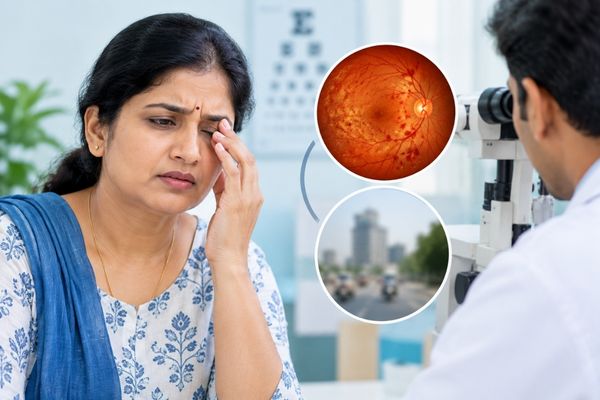
Diabetic retinopathy may not show clear signs in the early stages. As it progresses, some people may experience:
Blurred vision
Dark spots or floaters
Difficulty focusing
Changes in night vision
Sudden changes in eyesight
Loss of vision in advanced stages
Any unusual change in vision should be checked by an eye specialist.
Risk Factors
People with diabetes have a higher chance of developing diabetic retinopathy. The risk may increase due to:
Long duration of diabetes
Poor blood sugar control
High blood pressure
High cholesterol levels
Smoking
Diabetes during pregnancy
Managing these factors can help protect overall eye health.
Diagnosis and Eye Screening
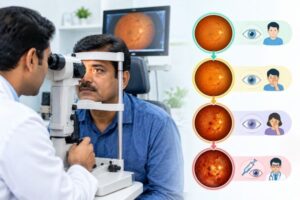
Diabetic retinopathy can develop without obvious symptoms. Regular eye screening helps detect retinal changes at an early stage.
An eye specialist may recommend:
Dilated Eye Examination
This examination allows the doctor to view the retina in detail and identify swelling, bleeding, or blood vessel changes.
Optical Coherence Tomography (OCT)
OCT provides detailed images of the retina and helps detect swelling or fluid accumulation.
Retinal Imaging
Retinal scans help monitor changes in the eye and support accurate treatment decisions.
Treatment Options
The treatment for diabetic retinopathy depends on the severity of the condition and the changes found during examination.
Treatment options may include:
Blood Sugar Management: Keeping blood sugar, blood pressure, and cholesterol levels under control helps protect eye health.
Laser Treatment: Laser therapy may be used in certain cases to manage abnormal or leaking blood vessels.
Anti-VEGF Injections: These injections may help reduce retinal swelling and abnormal blood vessel growth.
Surgery: Advanced cases with complications may require procedures such as vitrectomy.
An eye specialist recommends the most suitable treatment after evaluating the condition of the retina.
Preventive Eye Care Tips
People with diabetes can follow simple steps to protect their vision:
Attend regular eye check-ups
Monitor blood sugar levels
Maintain healthy blood pressure and cholesterol levels
Follow a balanced diet
Exercise regularly
Avoid smoking
Regular monitoring and early detection can help manage diabetic eye changes effectively.
Why Choose Shraddha Eye Care Trust for Diabetic Retinopathy Care?
Managing diabetic retinopathy requires accurate diagnosis and appropriate treatment planning. Shraddha Eye Care Trust provides specialised eye care support with detailed evaluation and personalised guidance.
Patients receive:
Comprehensive eye examinations
Retinal evaluation and monitoring
Support from experienced eye care professionals
Individualised treatment plans
Guidance for diabetes-related eye conditions
The team focuses on providing suitable care to help patients maintain better eye health.
Conclusion
Diabetic retinopathy can affect vision gradually, often without noticeable symptoms in the early stages. Regular eye examinations and proper diabetes management can help identify changes early and support better vision care.
If you have diabetes or notice changes in your eyesight, consult Shraddha Eye Care Trust for a detailed eye evaluation and expert guidance for diabetic retinopathy management.
FAQs
Can diabetic retinopathy be prevented?
Maintaining healthy blood sugar levels, following a healthy lifestyle, and attending regular eye check-ups can help reduce the risk of diabetic retinopathy.
How often should people with diabetes get an eye check-up?
People with diabetes should have eye examinations as recommended by their eye specialist, even if they do not have vision problems.
Can diabetic retinopathy cause permanent vision loss?
Advanced diabetic retinopathy can lead to serious vision problems. Early diagnosis and treatment can help manage the condition.
Is diabetic retinopathy painful?
Diabetic retinopathy usually does not cause pain, especially during the early stages. Regular eye screening helps detect changes before symptoms become severe.